
My biology teacher from secondary school, a 82 years old, tough Frisian woman,
lives on a houseboat in Amsterdam. Each year from spring till autumn I go there, sometimes weekly to do repairs, maintenance and restorations. It’s a hobby, but my biology teacher says that without me, she would have had to leave her beloved boat a long time ago. It’s a steel boat from 1924, before welding was widely used, so it’s all riveted together. The rust flakes need to be hammered off the steel, there’s woodwork, and when you’ve reworked the whole boat from front to tail, the front starts rusting again and you start all over again.
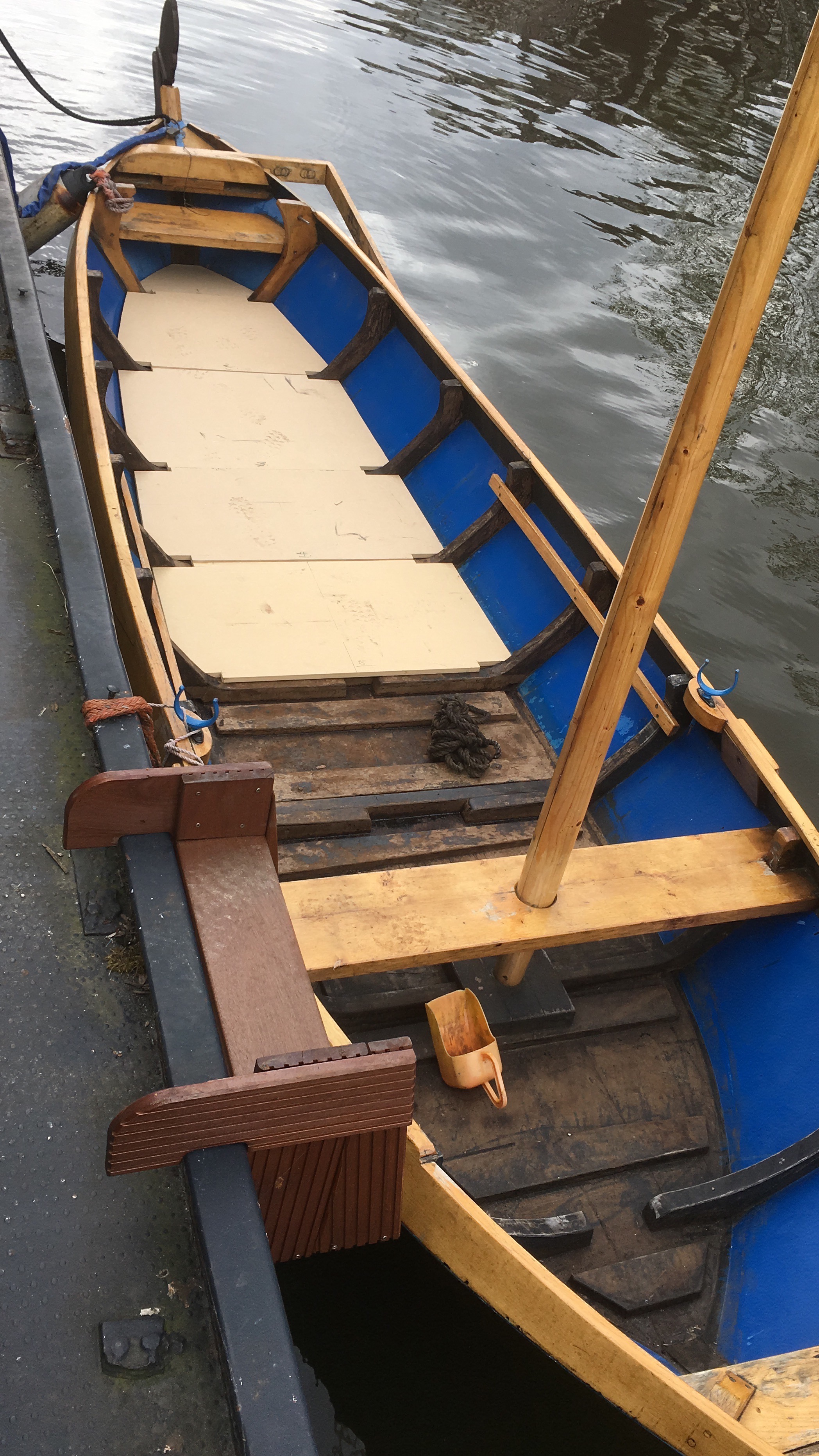
Here you see smaller boat next to the houseboat. it is a Giethoornse Punter. I made new deck plates for it, as the old ones were rotten. Some were lost so I had to redesign new ones from scratch. I used a wood composite material that withstands moisture and bacteria, even when submerged in water.
I also made the special step to get in and out of the boat, made from dark brown Bangkirai wood. It’s very sturdy!
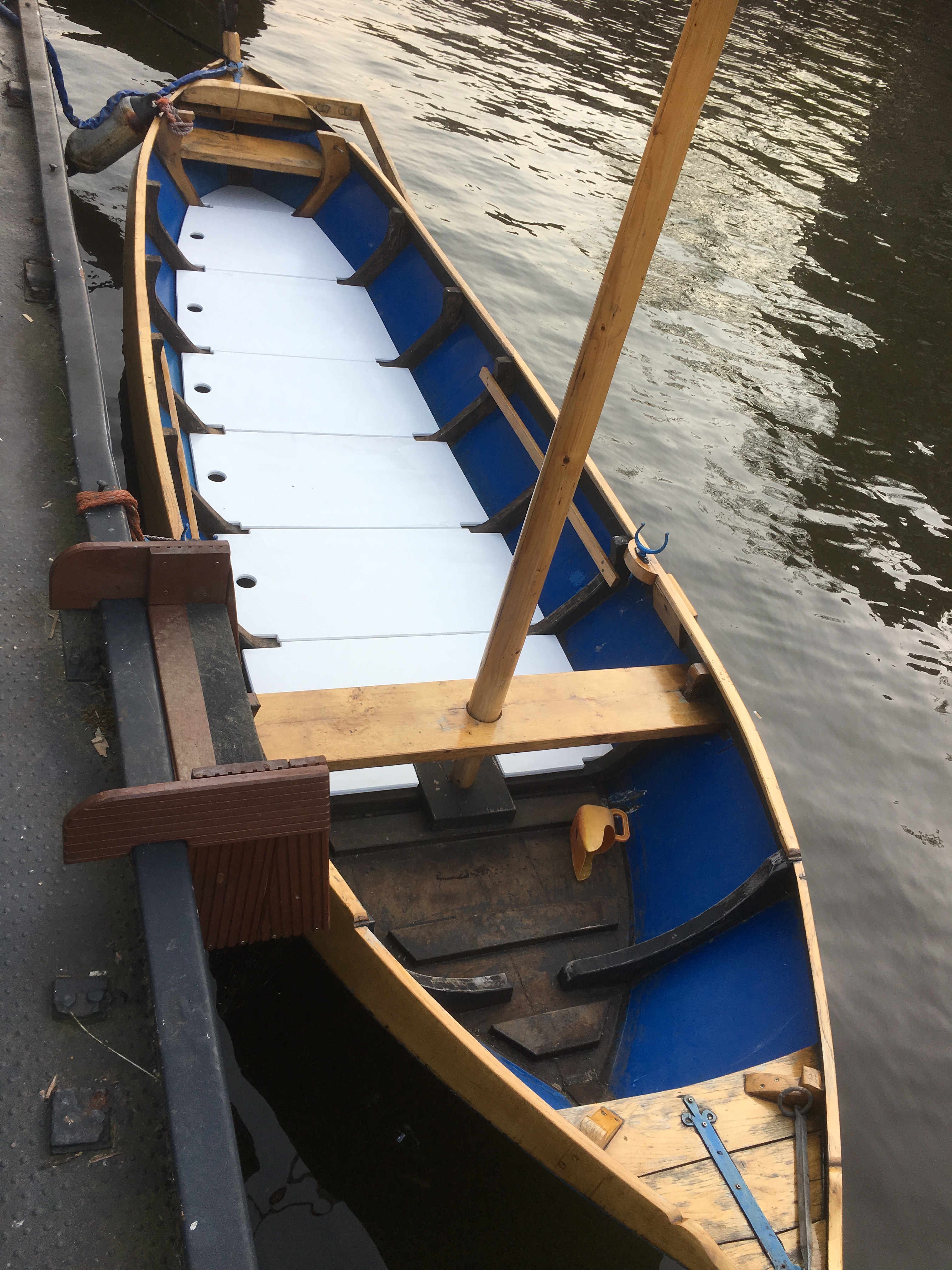
Halfway done with the deck plates, took a drill and a router and made a 3 inch hole in each one of them, for easier handling. Added a white basecoat. I love the way they complement the look of the boat, like scales of an insect.
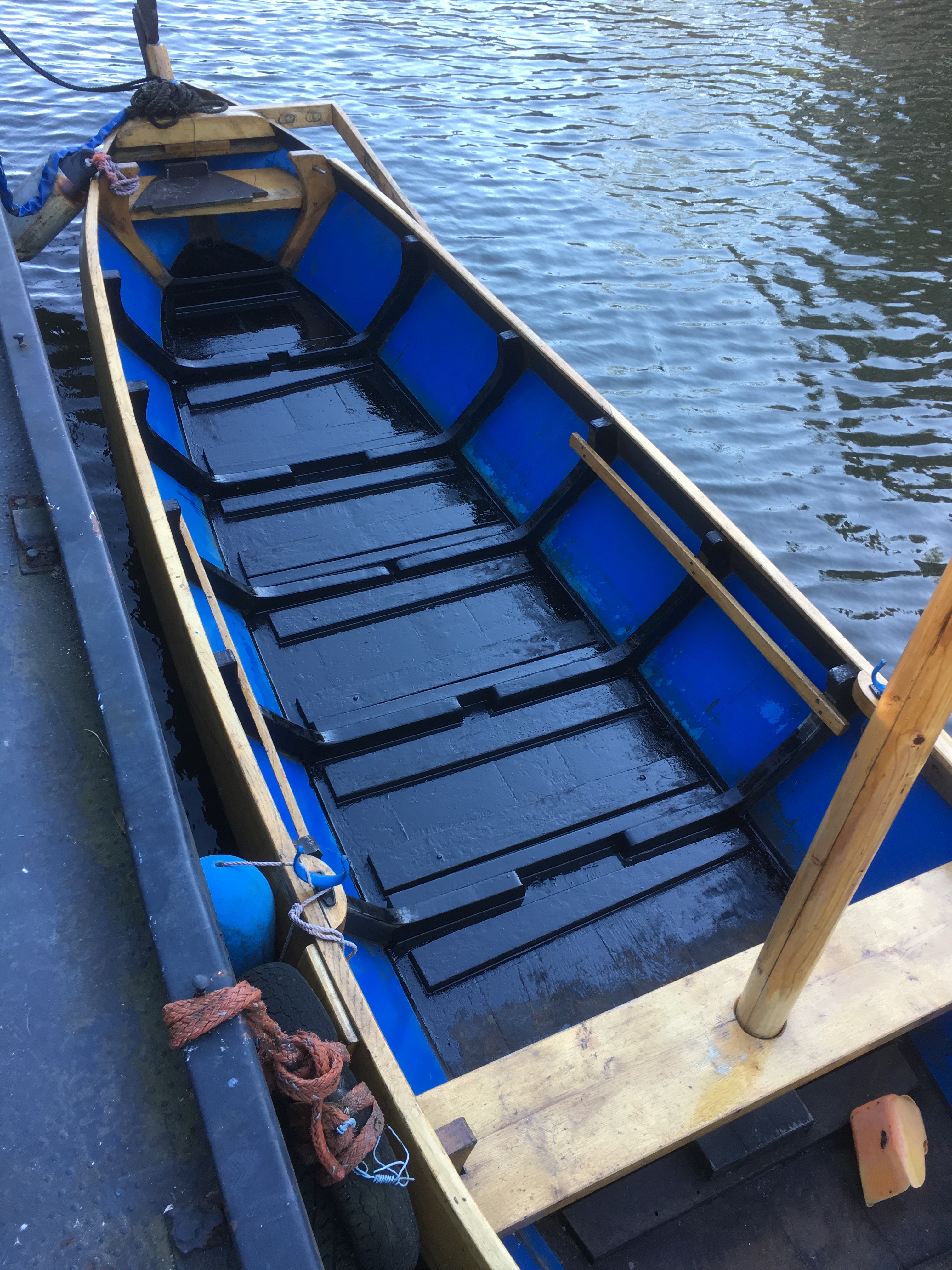
Then the bottom needed a good cleaning, sanding, new layer of tar.(Actually a product called Red Stockholm.)
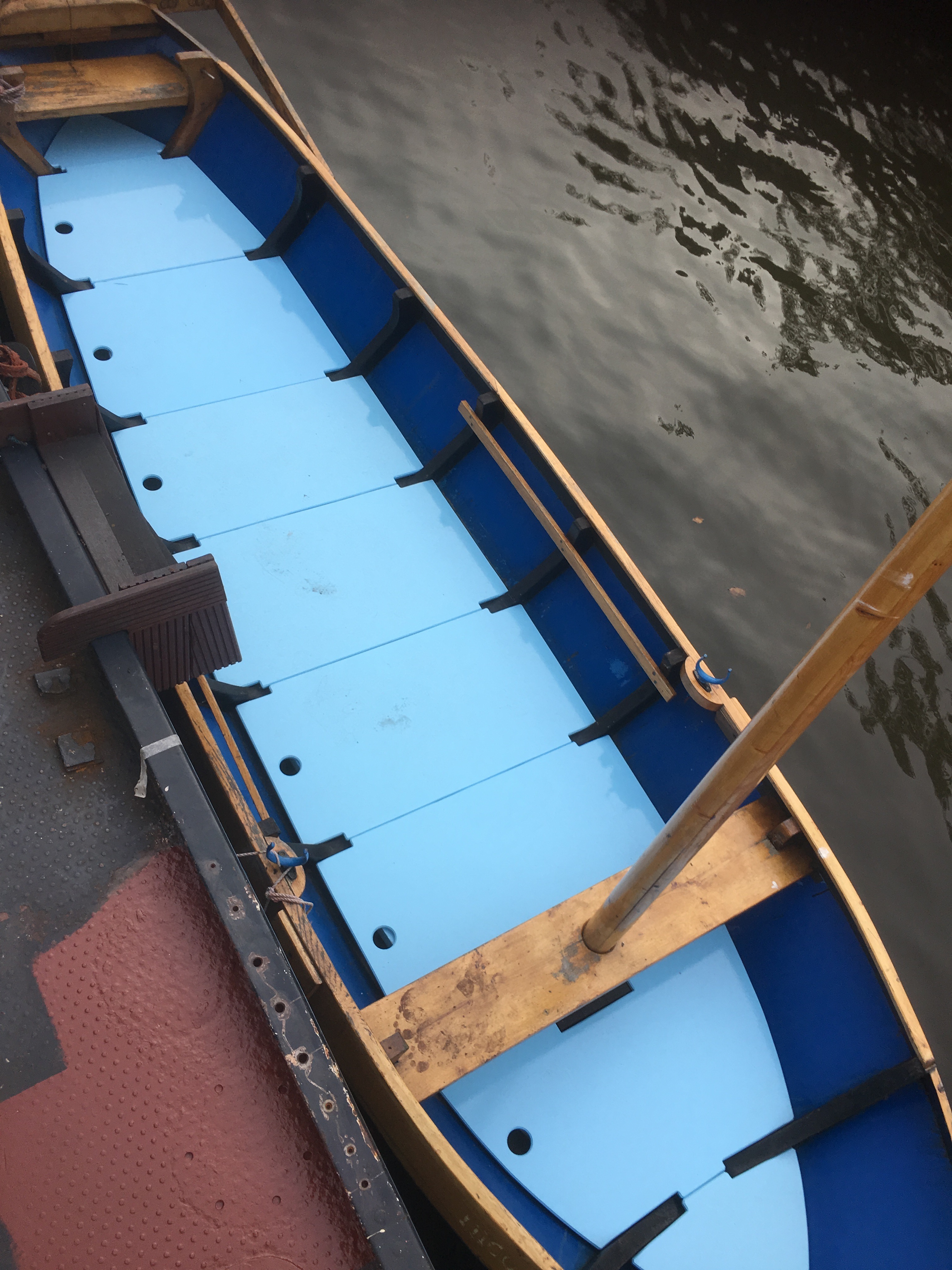
Step 5 involved having a small glass of Calvados on the aft deck, with my biology teacher, in the setting sun. We discussed shortcomings in Darwin’s evolutionary theories. Later that year, The main ship had a lot of rust around a porthole. Dealt with it in six steps:

Looked like crap, removed the old paint using an angle grinder.
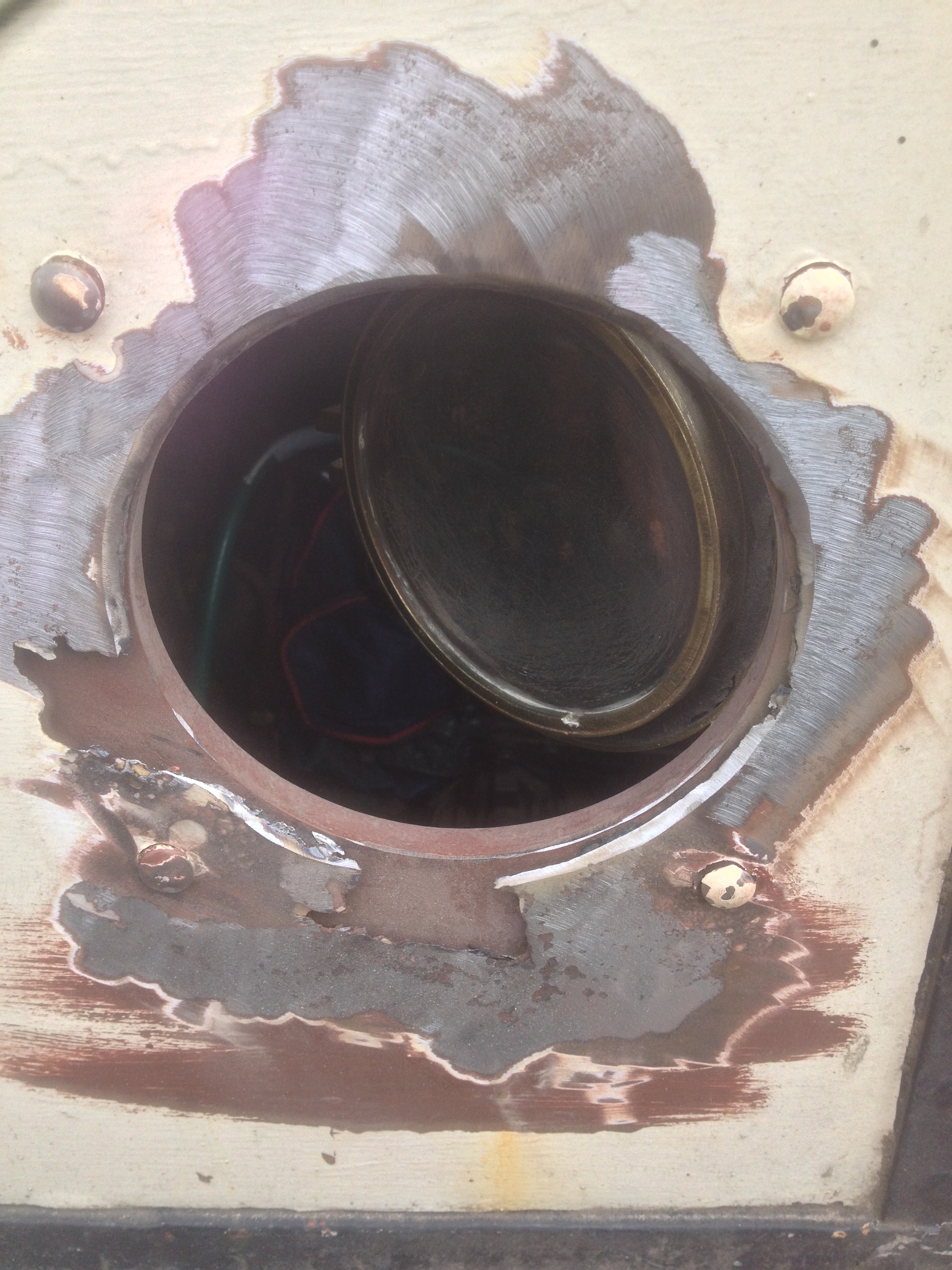
More leveling work, with the rearfitted porthole ring in place.

Epoxy works well on the steel.
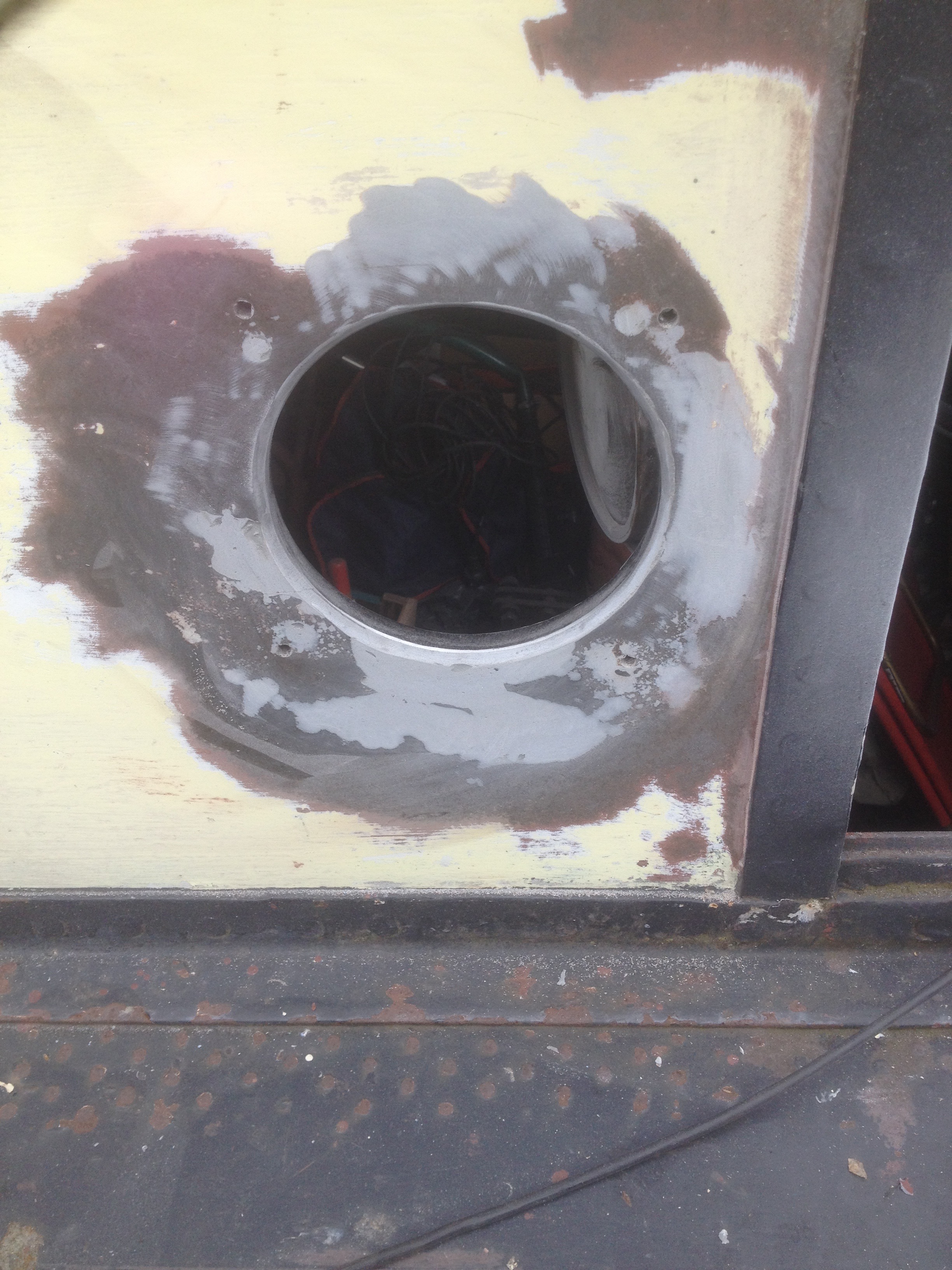
Level that down to the original surface.
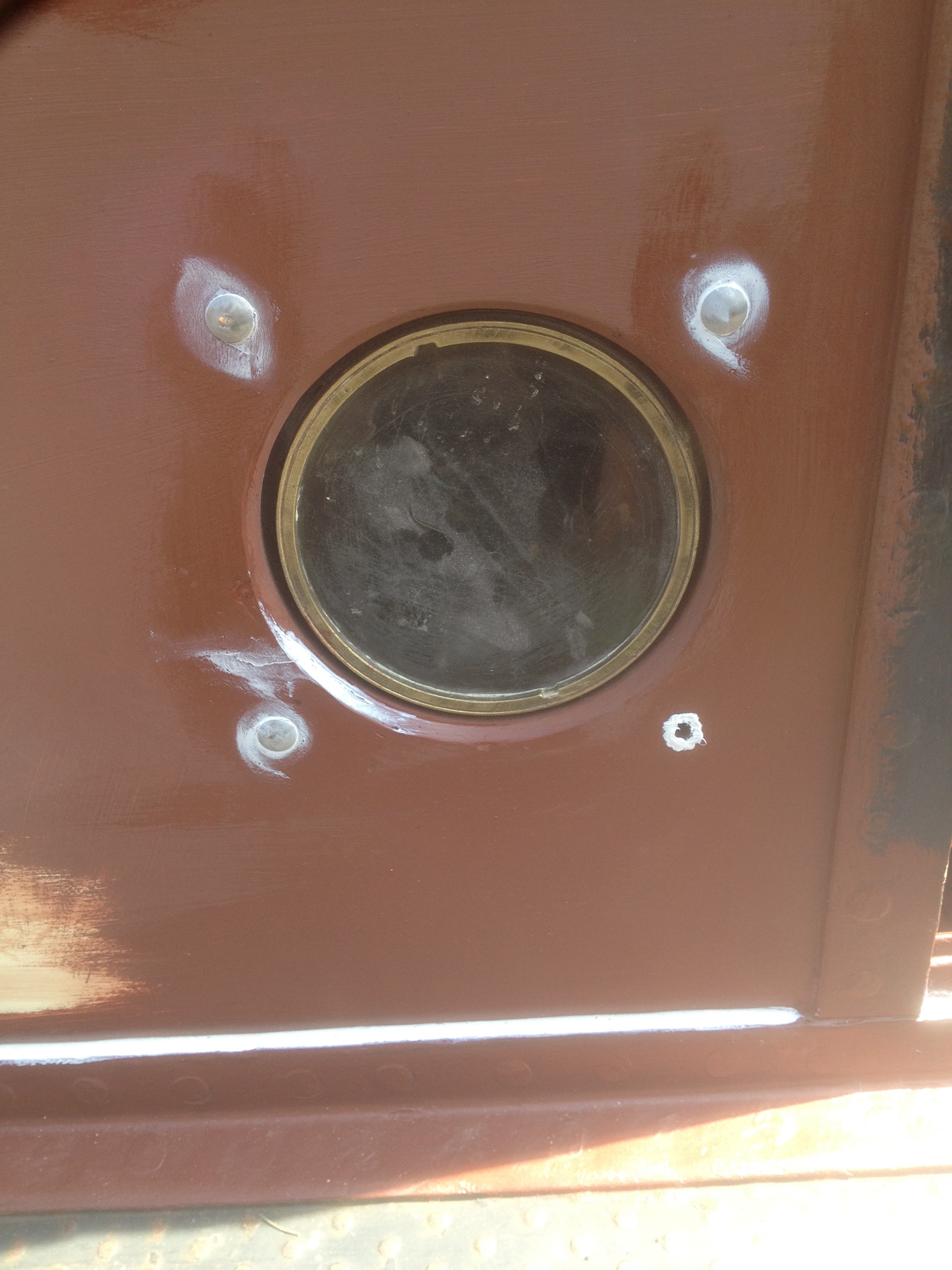
Applied Rustoleum steel primer and new stainless steel bolts.
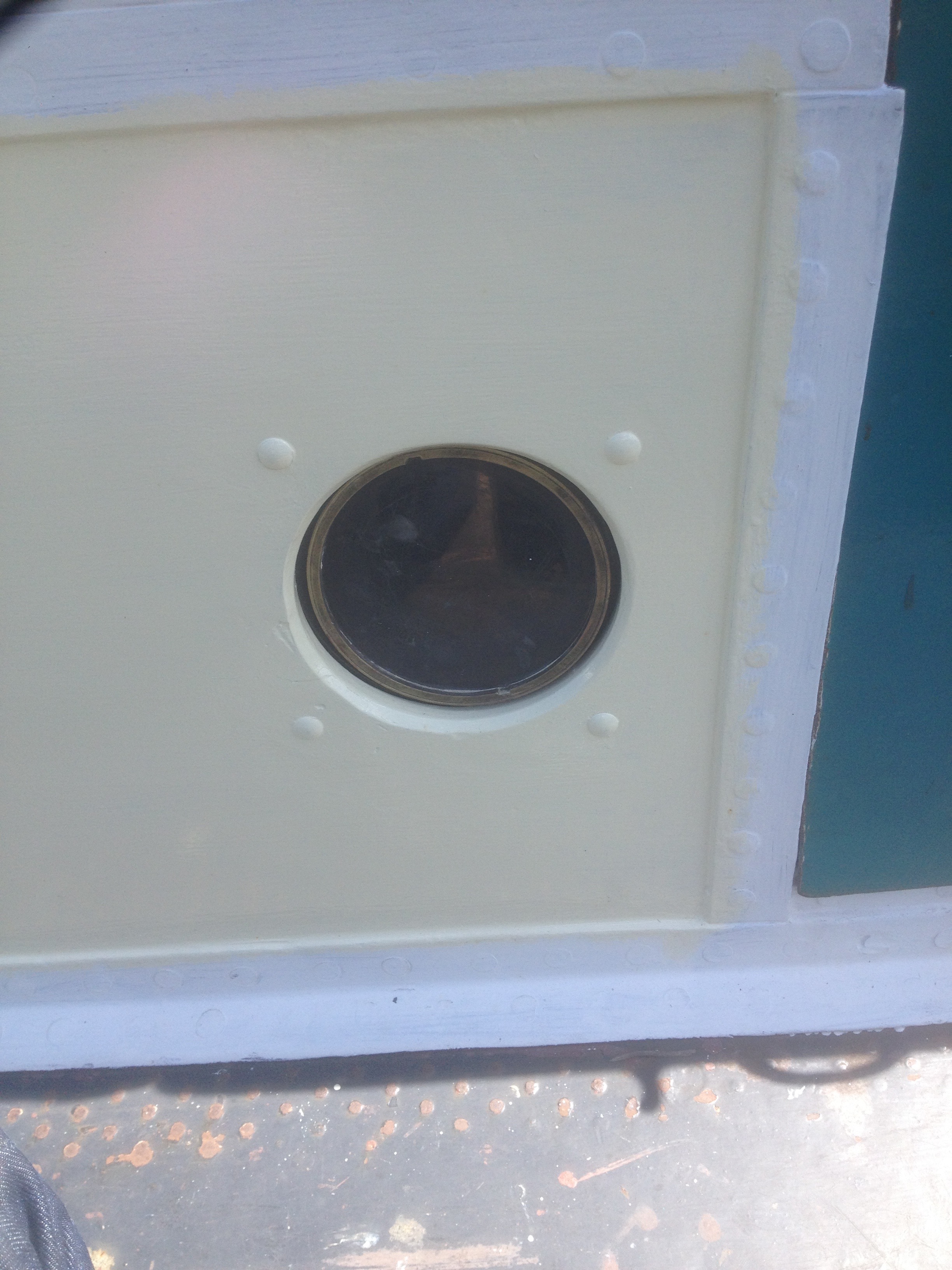
This porthole should be fine for another 6-8 years!
 Marc Sokpolie
Leave a comment